Quiet sneakers took over and the logo lost its job
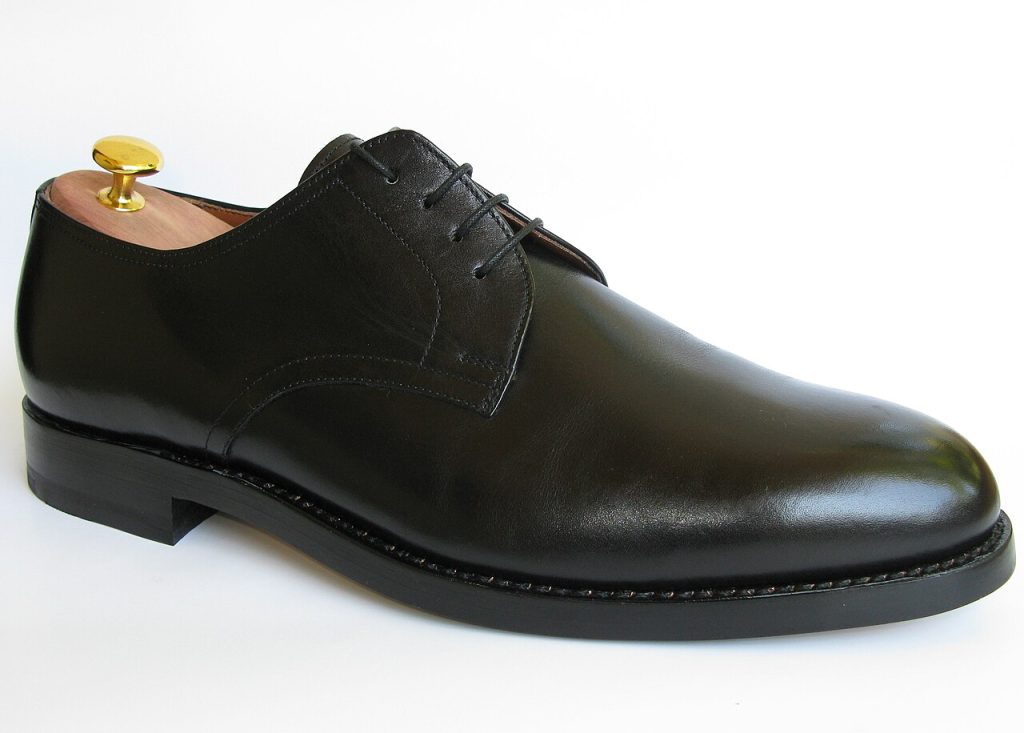
Walk through a train carriage in a city and count the shoes with a visible logo. It is fewer than it was. The pairs that moved this year were grey suede runners, plain leather low-tops, and trail shoes with a small wordmark on the tongue. Nothing on the side panel, nothing to identify at a glance. That is not an accident of taste. It is what happens when a product stops being a signal and starts being clothing.
What changed in how people buy
For a decade, the buying decision ran through recognition. A pair was desirable because other people could identify it, and the identification was the value. That logic pushed design toward bigger marks, bolder panels, and colorways that read from across a room.
Recognition stopped paying. When everyone can identify a pair, it stops distinguishing anyone, and the mark becomes noise. The natural response is to remove it, which is why the current desirable pairs look like the shoes people wore before sneakers were a culture.
The other driver is price. A quiet pair can be bought at retail, worn for two years, and replaced. A loud pair invites comparison, depreciation, and the question of whether too much was paid.
The quiet pair is not a cheap pair
Plain does not mean inexpensive. A grey suede runner at 200 dollars and a leather low-top at 400 both qualify, and both are bought by people making the same argument: the shoe should be good rather than identifiable.
What they are paying for is material and proportion. Nap on the suede, the thickness of the leather, the shape of the toe, the height of the midsole. These are details that only register at conversation distance, and that is the point.
It also changes the resale logic. A quiet pair loses value slowly because it does not depend on a trend cycle, and it never spikes because there is nothing to speculate on. That is a worse investment and a better shoe.
Where the trend goes wrong
Quiet can become invisible. A rotation of five grey shoes is not restraint, it is a uniform with no variation, and it gets boring in a way that a loud pair never does. The people who wear this well usually keep one or two pairs with some character.
It can also become a status game of its own. The plainest possible shoe in the most expensive leather is still a flex, just a quieter one, and the codes are just as legible to the people who know them.
The worst version is a loud silhouette in a quiet colorway. A technical runner with six panels in all black does not become minimal, it becomes muddy, and the design disappears into itself.
What to look for in a quiet pair
Start with the material, because it is the only thing left to look at. Suede should have visible nap and no plastic sheen. Leather should crease rather than crack, which you can test by pressing the panel near the toe with a thumb.
Check the proportion instead of the details. A toe box that is too long, a midsole that is too thick for the upper, or a collar that sits too high will read as wrong from any distance, and no colorway hides it.
Look at the hardware. Eyelets, lace tips, and the tongue label are where a cheap pair gives itself away. On a shoe with no logo, those small parts are the entire design.
What it means for the next few seasons
The pendulum will swing. Loud pairs will come back, probably with a retro reference that makes them feel new, and the quiet rotation will look dated for a year. That is how this works.
What probably will not come back is the assumption that a visible logo is inherently worth more. That idea depended on scarcity of information, and information is no longer scarce.
Buy the pair you would wear if nobody could identify it. That test has always been the right one, and it is finally the one the market is applying.
What the price tiers reveal
The quiet shift is clearest in the middle of the market. Pairs between 150 and 250 dollars with no visible branding are selling at full price, while louder pairs in the same range wait for a discount.
At the top end, the plain leather shoes that used to be considered boring are now the ones with waiting lists. At the bottom, the plain canvas and suede pairs have become the default first purchase for people who do not want to look like they are trying.
That is a real change in what the market rewards. It also means the quiet pair is no longer a contrarian choice, which will eventually make it as predictable as the logo it replaced.