Puma Speedcat restocks: sizing, colorways and what sells out
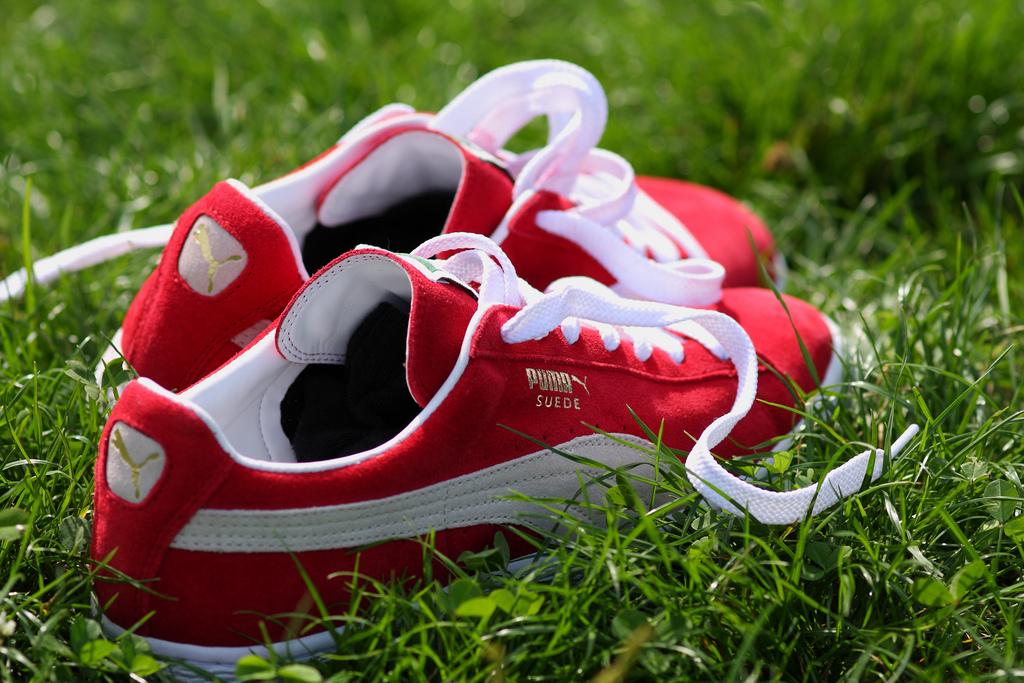
Puma’s Speedcat is a 1999 motorsport shoe that spent two decades as a paddock curiosity before returning as a fashion flat. It sits in the $100 to $130 band, rides on a thin rubber cup sole with almost no cushioning, and sells through in small size runs rather than big ones. That pattern matters more than any single drop announcement.
The shoe underneath the trend
The upper is suede on most colorways, cut low with a rounded toe and a short lace throat. There is no midsole worth the name: a slim rubber sole, a stitched heel counter soft enough to fold, and a cat logo pressed into the lateral heel. Nothing about it is engineered for distance.
That construction is why it photographs well and why it hurts after a long walk. Heel strike lands straight on rubber. Anyone coming from a 10mm drop and a foam midsole will feel pavement within an hour, and feel it again the next morning.
Build quality varies by colorway in a way that photos hide. Suede pairs hold shape and take a brush; the smooth synthetic versions crease across the toe box inside a month and never recover. Read the material line on the product page instead of trusting the studio shot.
Price is the other tell. Pairs under $100 are usually the synthetic builds on the standard sole, while suede versions sit closer to $120 and up. The gap is material and a slightly thicker insole, not marketing, and it is the difference between a shoe that survives a winter and one that does not.
Sizing is closer to a dress shoe
The last is narrow and slightly long. Most people take their usual EU size and find the ball of the foot pinched. Wide feet should go up half a size, not a full one. A full size up creates heel slip that lacing cannot fix, because the throat is short and sits low.
Cross-brand translation is rough but useful: the Speedcat runs about half a size smaller than a Nike Air Force 1 in the same marked size, and close to an Adidas Samba OG. If you wear a US 9 in the Samba, start at US 9 here and expect a tighter midfoot.
Puma lists many colorways as unisex, but its EU to US conversion does not match Nike’s. Measure your foot in centimeters against Puma’s own chart rather than converting from another brand’s US size, which is where most bad purchases start.
Colorways that survive a restock
Black suede with a white formstrip is the pair that reappears most often and trades closest to retail. Red and pale cream pairs clear small sizes quickly and sit in the large ones, which is the opposite of how most sneaker runs behave. If you wear a US 11 or above, patience pays.
Light suede is the maintenance trap. One wet commute leaves tide lines across the toe that need a suede brush and a full dry cycle, not a wipe. Dark nubuck hides everything and looks flatter for it, which is the trade you make for a shoe you can wear in November.
Metallic and coated finishes are the ones to skip. The coating scuffs white at the toe crease and cannot be dyed back. On a shoe with this little structure, a visible scar reads as damage rather than patina.
Where pairs actually land
Puma’s own site and flagship stores get the widest size runs. In Europe, JD Sports and Foot Locker carry select colorways, and independents like END and Slam Jam take the quieter builds. US stock is thinner and skewed to the black and white pairs.
Restocks are silent. There is no countdown, no raffle, and often no announcement beyond a product page going live again. Back-in-stock alerts on the brand site and a couple of stockist pages do more than any release calendar.
Resale premium is thin enough that paying over retail rarely makes sense. Only the smallest and largest sizes carry a real markup, and even then it is the kind of gap that closes within a month.
When to skip it
The Ballet and XL variants use a different last and a different sole. Sizing advice from the standard Speedcat does not transfer, and neither does the fit you may have tried in a store. Treat them as separate shoes.
If you walk more than three miles a day, or stand on concrete for a shift, this is not the shoe. The sole is a fashion sole with a tread pattern borrowed from a racing slick, and it wears flat at the heel in a season of daily use.
Buy it as a flat and wear it as a flat. Paired with wide trousers it holds a clean line at the ankle, and with straight denim it disappears in the way a good plain shoe should. The people who end up unhappy with a Speedcat are the ones who expected a sneaker’s cushioning from a shoe that was never built to provide it.