Repair shops are booking weeks out as owners resole instead
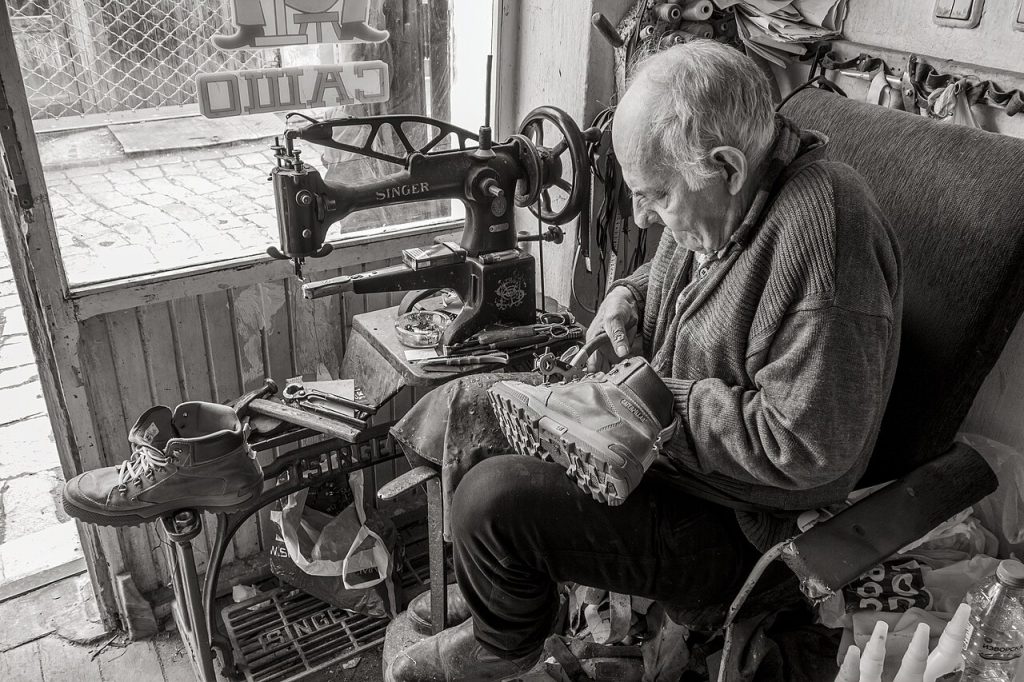
Sneaker repair services in several cities are quoting turnaround times of three to six weeks, up from a week or two a few years ago, according to shop owners and booking pages. The customers are younger than the trade is used to, and a growing share of the work is resoling rather than leather repair.
What shops are seeing
The work has shifted from dress shoes to cupsole sneakers, which is a different craft. A welted leather sole comes off cleanly and goes back on with a stitched welt. A modern sneaker sole is cemented, sometimes with a molded midsole that was never designed to be separated.
Shops that have taken the work report the same pattern: customers arrive with a pair whose upper is intact and whose outsole is worn through at the heel. The repair is a rubber half-sole or a full replacement, priced somewhere between $60 and $120 depending on the construction.
Turnaround is not the only change. Shops report more customers asking for a quote before committing, and more of them arriving with a photo of a worn sole rather than the shoe itself, which suggests the decision is being made on cost rather than sentiment.
That price is the whole story. When a replacement pair costs $150 and up, and the worn pair already fits, a $90 resole stops looking like a compromise.
The economics behind the queue
Repair pricing has risen with labour, but not as fast as sneaker retail. A cobbler can charge more for the same hour of work than they could five years ago, and customers who would once have replaced a shoe are now comparing the repair to a new purchase rather than to nothing.
Parts supply is the bottleneck. Vibram and similar sole suppliers sell to the trade in minimum quantities, and a shop that stocks a sole for one model may wait months for a restock. That is a large part of why turnaround times stretch.
Rent and labour are the fixed costs, and both rose. A shop that once ran repairs as a side line to key cutting now finds the bench is the profitable part, which is why more of them advertise sneaker work at all.
There is also a skills gap. Cemented sneaker construction is easy to botch, and not every high street cobbler will touch it. The shops that do are fewer than the demand, which is why the good ones are booked.
Which shoes are worth repairing
Leather and suede uppers with a stitched or cemented sole are the best candidates. A pair of leather sneakers with a worn outsole and an intact upper can usually take a new sole and another two years of wear.
Foam midsoles are the limit. Once a polyurethane midsole starts crumbling, there is nothing to glue a new outsole to, and the repair will not hold. Shoes with visible cracking along the midsole edge are past saving.
Ask for the midsole to be checked before you accept a quote. A shop that will not press a thumbnail into the foam is not assessing the job, and a repair that fails in six months costs more than a replacement would have.
Technical running shoes are usually not worth it either. The midsole foam is the part that fails first, and replacing it is not economic on a shoe that was built as a disposable.
What the shift says about buying
If repair is becoming normal, construction becomes part of the purchase decision again. Stitched soles, full-grain leather, and replaceable insoles are suddenly features rather than nostalgia, because they determine whether a pair can be serviced at all.
It also changes the calculus on price. A $200 pair that can be resoled twice is cheaper per year than three $80 pairs that cannot, which is a familiar argument in boots and a new one in sneakers.
The secondhand market reinforces it. A repaired pair holds value better than a worn one, and listings that mention a recent resole move faster, which gives owners a financial reason to spend on the bench rather than the shelf.
Brands have noticed. Several have opened or promoted repair programmes in the past two seasons, mostly for their heritage lines, and the ones that publish parts availability are the ones worth trusting on the claim.
What to ask before you hand over a pair
Ask whether the shop has done that specific construction before, and ask to see a finished example. A cemented sneaker resole is a different job from a welted boot, and enthusiasm is not experience.
Confirm the sole being used and whether it matches the original in thickness. A thicker replacement changes the fit and the stance of the shoe, which matters on a low-profile model.
Get the timeline in writing. If a shop quotes three weeks and takes eight, you have lost a season with the shoe. The queue is real, and the honest shops are the ones telling you how long it actually is.
Agree in advance what happens if the repair fails. A good shop stands behind the work for a few months, and the ones that will not are usually telling you they are not certain it will hold.