Skate silhouettes became the default and nobody announced it
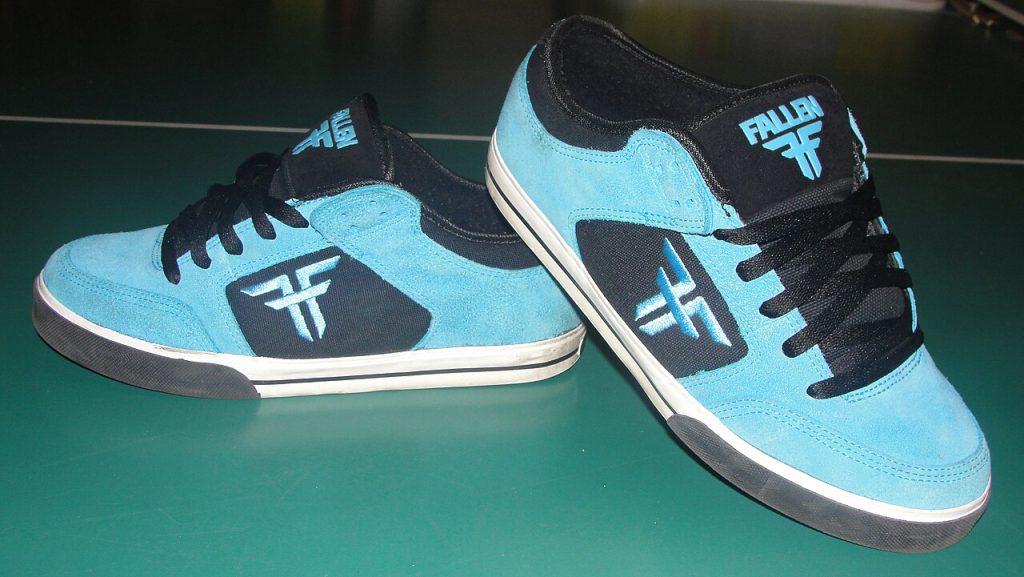
Walk through any city centre and count the shoes. A large share of them are flat, low, canvas or suede, with a vulcanized sole and a rubber toe cap. Almost none of those wearers skate. The skate shoe did not have a moment; it became the background.
How the switch happened
Basketball shoes owned the default position for two decades because they were the most visible shoe in the most visible sport. Skate shoes took it the way a language takes over a street: through ubiquity rather than announcement.
Price did most of the work. A canvas high top or a suede low top sat under $100 while retro basketball models climbed past $150, and the gap widened every year. When the cheap option also looks correct with wide trousers, the decision makes itself.
The other factor is silhouette. Skate shoes are flat and low, which reads clean under a long hem. A chunky runner needs the trouser to sit on top of it; a vulcanized shoe slides under and disappears.
The shapes that won
Three families dominate. The canvas high top, unchanged for decades, still functions as the neutral shoe of the category. The suede low top with a vulcanized sole is the second, and it has absorbed almost every trend cycle without changing shape.
The third is the puffed-up skate silhouette, the one with a fat tongue and a wide toe, which came back through skate shops rather than fashion press. It looks wrong in photos and right on a foot, which is why it spread slowly and then everywhere.
Availability reinforced all of it. Skate shoes are stocked in skate shops, mall chains, and discount stores at the same time, so the same silhouette appears at three price points and in every size. A shoe you can always find stops being a purchase and becomes a default.
What these have in common is a lack of visible technology. No air unit, no plate, no foam stack. There is nothing to date them, which is exactly why they keep coming back.
Color is part of the mechanism. Black, white, navy, and a rotating set of muted suede tones cover almost every outfit, and the category never needed a seasonal palette to sell. That is why the shapes outlive the trends that borrow them.
Why skaters are not thrilled
The people who actually skate have watched their work shoe become a fashion item, with the usual consequences: scarcity in common sizes, price increases, and colorways aimed at buyers who will never do a kickflip.
The functional complaints are real. A vulcanized sole has almost no cushioning, and the flat profile that reads well on the street is hard on the arches over a long day. Fashion buyers tolerate this; skaters replace insoles.
Shops have adapted by pushing volume into their own branded footwear, which protects margin and keeps something on the wall. The trade-off is that a generation is learning on shop-brand shoes rather than the classics that built the category.
There is also a supply problem. Skate shops buy in small quantities and rely on core models staying available. When a colorway goes viral, the shop cannot restock, and the local scene loses a shoe it depended on.
The styling logic
Skate shoes work because they are short. The collar sits below the ankle bone on a low top, which leaves room for a wide trouser hem without stacking. On a high top, the canvas shaft gives the trouser something to fall against.
They also take damage well. Scuffs on canvas read as wear rather than ruin, which means the shoe looks better in month six than in week one. Very few sneakers improve with abuse; this category does.
It also helps that the category is cheap to replace. A worn pair can be retired without a decision, which encourages wearing them hard, which produces the patina the look depends on in the first place.
That is the real reason the look stuck. It is not nostalgia for skateboarding. It is that a cheap, flat, scuff-tolerant shoe in a neutral color is the easiest thing to build an outfit around, and the market eventually noticed.
What comes next
The silhouette is unlikely to change much, because there is nothing left to remove. What will change is the price ladder: more premium materials on the same shapes, more narrow collaborations, and a wider spread between the $70 canvas pair and the $160 suede pair built on the same last.
That split is already visible. The cheap version stays available and gets worse, the expensive version gets better leather and a better insole, and the two look identical in a photo from three meters away.
The risk is that the ladder splits far enough that the cheap version becomes disposable and the expensive one becomes precious, and the middle disappears. That is what happened to the basketball shoe, and it took the everyday pair down with it.
None of this is a trend that needs defending. A flat shoe with a rubber sole has been the default for most of the last century, interrupted by a few decades when athletic technology made shoes into status objects. The skate shoe did not win anything. It just outlasted the argument.