Converse Chuck 70 high top: canvas, foxing and half sizes
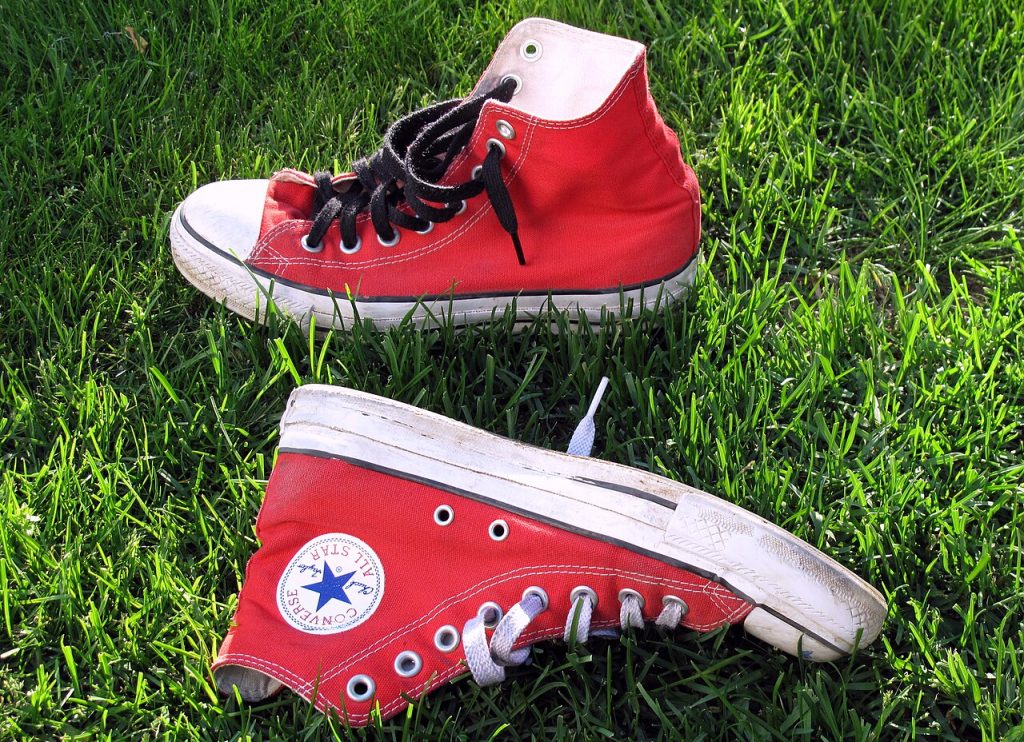
The Chuck 70 is the same silhouette as the standard Chuck Taylor with better materials and a higher price, usually $85 to $95 against $65. The differences are real, measurable, and mostly in places that decide whether the shoe survives a second year.
What the extra money buys
The canvas is heavier, closer to 12oz than the standard shoe’s lighter weave, with a tighter selvedge at the eyestay. The rubber foxing is taller and wraps further up the toe, and the toe cap is thicker with a glossier finish.
The eyelets are metal rather than painted, and the lace is longer and flatter. Small things, but they are the parts that fail first on the cheaper shoe: painted eyelets chip at the edge, and the standard lace frays through at the tip within months.
Inside, there is a removable Ortholite insole rather than a flat slab, plus a canvas heel strip that reduces the seam digging into the Achilles. The outsole is still vulcanized rubber with a diamond tread, but the compound feels denser.
The last is also slightly narrower and longer than the standard Chuck. That single change is why sizing advice for one does not apply to the other.
Eighteen months of canvas
The upper held up well. No tears at the eyestay, no separation where the canvas meets the foxing, and the only visible wear is a soft fade along the flex line behind the toe cap. Canvas in this weight takes a scrub without thinning.
The foxing told a different story. On the inner heel of both shoes, the rubber wore through to the canvas at around month fourteen, from the way the foot rolls in a high top. That is the standard failure point on any vulcanized shoe and the Chuck 70 delays it rather than prevents it.
The toe cap scuffed, yellowed slightly, and cleaned up with a melamine sponge. Glossy rubber marks easily and also cleans easily, which is a better combination than matte rubber that stains permanently.
Cleaning changed the canvas more than walking did. A soft brush and cold water lifted the dirt, but the scrubbed areas dried slightly lighter than the rest, leaving a faint patch on the outer quarter. On black and navy this is invisible; on natural white it is not.
Sizing runs a full size large
Chucks are the classic size-down shoe, and the 70 is no exception. Most people take a full US size smaller than their Nike running size, and half a size smaller than their Dunk or Air Force 1 size.
The narrow last matters more than the length. Wide feet should size down only half a size and accept extra length, because a full size down pinches across the ball. The canvas does stretch over a few weeks, but not evenly.
High tops fit tighter at the ankle than low tops in the same size. If you wear thick socks or have a high instep, try the low top in your usual size before committing to the high.
Narrow feet are the exception. The last is already slim, so a full size down can pinch across the ball on a foot that is long in the toe. Take half a size down there and accept a little extra length.
Break-in and the heel
The first week is the worst part. The rubber foxing at the heel is stiff and the canvas has no give, so the shoe rubs the Achilles until the lining softens. Thick socks for the first four wears solve it, and after that the collar folds into shape.
The insole compresses about 3mm in the first month, which is why the shoe feels tighter on day one than on day thirty. Do not size up to compensate; the length is already generous.
Vulcanized soles need to be flexed. Walk a few blocks before deciding the shoe is uncomfortable, because the sole softens noticeably once the rubber breaks at the ball.
The insole is worth replacing if you stand all day. A flat aftermarket insole adds about 4mm and improves the ride more than any break-in routine, and it costs less than the gap between the two models.
Worth it over the standard Chuck
If you wear the shoe more than twice a week, yes. The heavier canvas resists the toe crease that ruins standard Chucks, the insole lasts longer, and the foxing holds its shape instead of collapsing sideways.
If you wear a pair occasionally, the standard version is fine and the $30 difference buys nothing you will notice. The 70 is a durability upgrade, not a comfort upgrade, and the ride is still flat rubber on pavement.
Resale is not a reason to buy either version. The 70 holds slightly more value, but the premium disappears the moment the foxing scuffs, and foxing scuffs on the first wear.
Eighteen months in, the pair is scuffed at the toe, worn at the inner heel, and still structurally sound. That is roughly twice the service life of the cheaper shoe for a third more money, which is the only arithmetic that matters here.