What actually shows up on outlet and clearance sneaker racks
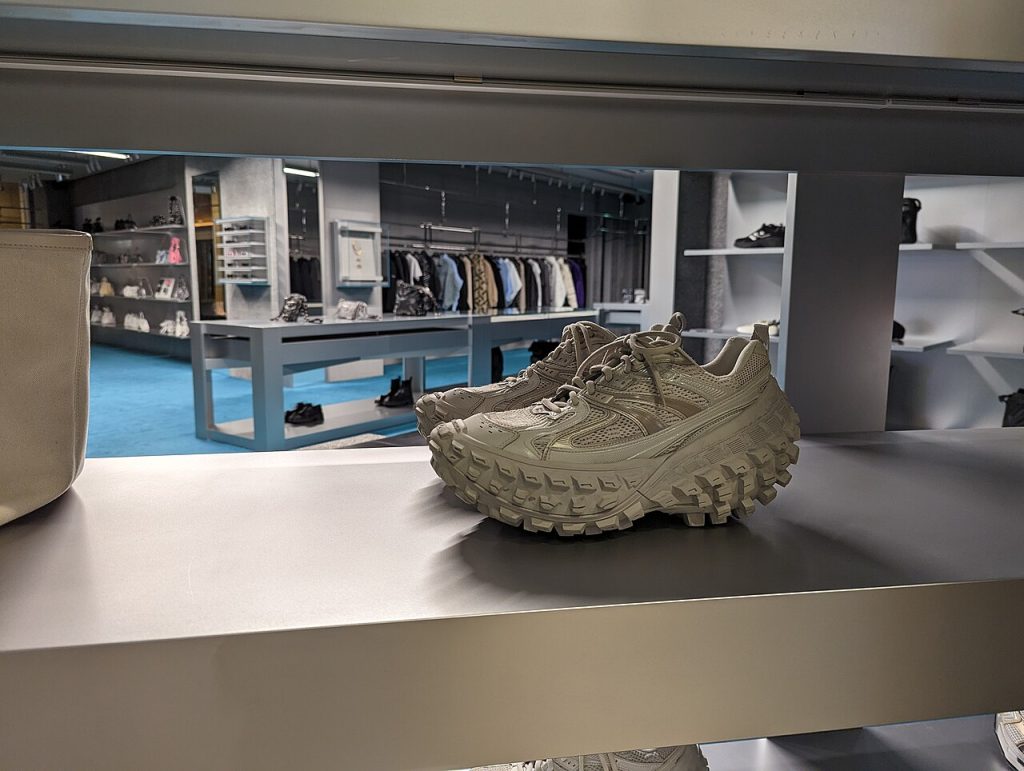
Outlet and clearance stock is not random. It is the tail end of a buying plan, which means the same categories appear year after year, in the same broken size runs, at discounts that follow a predictable curve. Knowing the pattern turns a wasted afternoon into two or three good buys a season.
What reaches clearance and why
Three things end up on the wall: seasonal colorways that missed their sell-through, core models in overbought sizes, and returns that cannot be sold as new. The first group is the interesting one, because a colorway that failed at full price is often the best-built shoe in the line.
Brands also push older iterations out when a new version lands. A runner in its final season gets marked down twice, and the second cut is where the value sits, usually 40 to 60 percent off the original.
What you will not find is a hyped collaboration or a launch-day colorway. Those are allocated and gone before the outlet system sees them.
Online clearance follows the same logic with a longer tail. A model that clears in stores in February often stays on the website until April, in the sizes nobody bought, at a price that drops once more before it disappears entirely.
The size run problem
Clearance racks are sorted by what did not sell, and what does not sell is predictable: US 8 to 10.5 moves at full price, so the leftovers cluster at US 7 and below and US 12 and above.
Width adds another filter. Wide and narrow runs of the same model are stocked in smaller quantities, so they reach clearance more often. If you need a 2E, the outlet is frequently where that shoe actually exists.
That is good news if you wear a US 13 or a US 7.5. It is bad news if you are a US 9.5, which is the single hardest size to find discounted, and the reason so many people end up buying a half size that does not fit.
Women’s runs behave differently. Small sizes in women’s specific models clear fastest, and the mid sizes sit, which is the inverse of the men’s pattern.
Reading the price tag properly
Outlet tags usually show a comparison price, a current price, and sometimes a markdown percentage. The comparison price is not always the original retail. Check the model’s launch price independently before deciding a discount is real.
Look for a stamp or a sticker on the box lid. Some brands mark factory seconds or customer returns with a code, and those pairs are usually fine but carry no warranty. A pair with a return sticker and a scuffed outsole has been worn.
Look for a second sticker under the first. Repriced stock often carries the old label beneath the new one, and the gap between the two prices tells you how long the pair has been on the floor and how many cuts it has taken.
Second-quality marks matter on leather. A small dye irregularity on the quarter panel is cosmetic; a misaligned toe cap changes how the shoe creases and is worth avoiding even at 60 percent off.
Best times to look
Clearance cycles follow the retail calendar rather than the sneaker calendar. The deepest cuts land after a season ends and again after the winter holiday period, when returns flood back and floor space has to be cleared for spring stock.
Midweek mornings are quieter and the racks are tidier, which matters because the good pairs are usually buried rather than displayed. Restock days vary by store and staff will usually tell you if you ask.
Ask about the next markdown while you are there. Most stores know the date a week ahead, and a pair at 30 percent off today is often 50 percent off in ten days if it is still on the shelf.
Online clearance is worth checking on the same schedule. Selection is broader and size filters work, but the pair ships without inspection, so read the return policy before ordering a final-sale item.
When a discount is not a deal
A $60 sneaker marked down from $110 is only a deal if you needed a $60 sneaker. Outlet shopping rewards a list, not browsing, and the wall is designed to make an unplanned pair feel like a find.
Check the production date. A pair that has sat for three years has foam that has already started to harden, and no discount compensates for a midsole that will crack in eighteen months.
Compare the all-in cost rather than the sticker. A discounted pair that needs an insole, a resole, or a return trip has stopped being cheap, and outlet stock is final sale more often than not.
Try everything on, even in a brand you know. Outlet stock includes models built on different lasts for different markets, and the size on the box is not a guarantee. The pair that fits is the only pair worth the trip, and the rest of the wall is just inventory waiting for someone with a longer list.